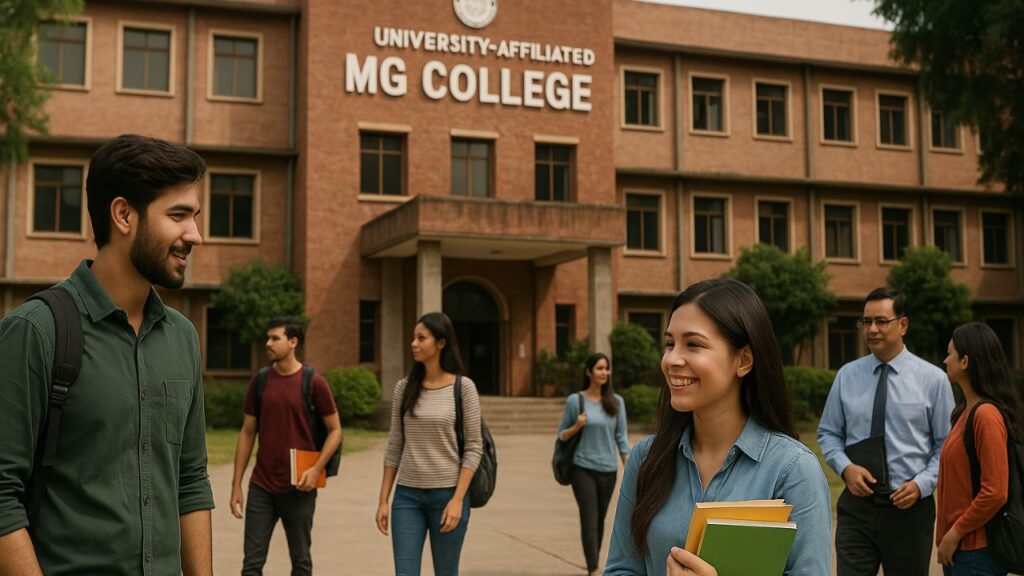
University-Affiliated Courses – MG College offers students a trusted pathway into higher education by aligning its teaching and assessment with university standards set under India’s quality frameworks. Learners benefit from structured curricula, continuous internal assessment, and end-semester examinations that map to outcomes emphasized by the University Grants Commission (UGC) and reforms outlined in NEP 2020. This university-affiliated approach keeps programs current with skill-based learning, flexible credits, and multidisciplinary exposure anchored by national benchmarks like the NIRF. At MG College, affordability and access go together with student support, mentoring, and bridge courses that help rural and first-generation learners thrive without compromising academic rigor. Students are encouraged to use credible open resources—government e-learning, digital libraries, and internships—so classroom theory translates into real projects and community impact. From orientation onward, faculty guide you through study plans, internal tests, and practicals, building confidence for university exams and industry interviews. The result is an inclusive, value-driven campus that prepares graduates to succeed.
University-Affiliated Programs With Strong Academic Foundations
Being university-affiliated means MG College follows syllabi, credit structures, and evaluation policies recognized across India, including credit mobility through the government’s Academic Bank of Credits (ABC). Departments adopt outcome-based education, practical labs, and tutorials that reflect national expectations for graduate attributes. Where applicable, programs draw guidance from the AICTE and reference AICTE’s evolving Model Curriculum to enrich core and elective subjects with projects and internships. Faculty also align assignments with NEP 2020 recommendations for multidisciplinary learning, research exposure, and ethics. Students learn how internal assessments contribute to cumulative grade points, how credits stack, and how university rules govern attendance and examinations. Quality assurance practices borrow from NAAC perspectives on teaching-learning, student support, and governance, ensuring coursework stays relevant and structured. This systematic, regulation-aware foundation allows MG College learners to pursue higher studies confidently, attempt competitive exams, and showcase competencies that universities and employers recognize.
MG College is committed to affordability so that meritorious students can pursue degrees without heavy financial strain. The college guides eligible learners to national aid and scholarships hosted on the National Scholarship Portal (NSP), alongside category-specific or merit-based schemes announced by central and state authorities. Where programs fall under technical or professional categories, learners may explore student-centric initiatives listed by AICTE student development schemes. Fee communication is transparent, with clear breakups shared at the time of admission and before each academic term. Students are encouraged to plan using authentic education statistics and policy notes published through the AISHE portal and NEP advisories to understand national trends and opportunities. MG College also advises on exam fee schedules, concession policies as applicable, and deadlines to avoid late penalties. By combining reasonable tuition with scholarship counseling and timely notices, the college protects learning continuity—especially for first-generation and rural students seeking sustainable pathways to graduation.
Dedicated Faculty, Research Culture, and Mentorship
The heart of MG College is a student-first faculty team that blends classroom clarity with mentoring, remedial sessions, and career guidance. Teachers prioritize concept mastery, unit-wise revision, and previous-year question practice while integrating reputable open resources like SWAYAM MOOCs for supplemental learning. Library orientation includes access to national platforms such as the National Digital Library of India (NDLI) and research support through e-Shodh Sindhu consortium resources where eligible. To nurture inquiry, departments encourage mini-projects, seminars, and poster presentations mapped to program outcomes, with faculty providing rubrics and constructive feedback. Students learn to cite sources ethically, present data clearly, and collaborate in small groups. Mentorship meetings address study strategies, attendance, stress management, and university exam readiness. This close guidance—combined with structured lesson plans and bridge courses—helps varied learners build confidence, improve grades, and translate subject knowledge into practical competence.
Career Readiness, Internships, and Holistic Growth
MG College integrates career-readiness into every semester through aptitude training, communication labs, and placement guidance that mirror the expectations of recruiters. Students explore internship listings on credible platforms such as the AICTE Internship Portal and leverage the government’s National Career Service (NCS) for job pathways. Innovation and entrepreneurship clubs take cues from national frameworks like ARIIA, while skilling workshops align with initiatives under Skill India. Co-curriculars—NSS, cultural forums, and sports—develop leadership, teamwork, and community engagement, supporting the holistic vision of NEP 2020. Faculty-coordinated mock interviews, CV clinics, and domain-specific practice tasks ensure students articulate projects and internships effectively. Alumni talks demystify early career choices, while values-based sessions strengthen ethics and professionalism. With this ecosystem, MG College graduates step into interviews with clarity, credible certifications, and demonstrable work samples—ready to contribute meaningfully to industry, public service, or higher research. University-Affiliated Courses